Vatican Museums Guide 2026
Vatican Museums Guide 2026: Tickets, Hours & Tips
Vatican Museums Guide: Tickets, Hours and Tips from Metro Cornelia
Most of our guests book the Vatican Museums before they book a single dinner, and it’s easy to see why. Michelangelo’s Sistine Chapel, the Raphael Rooms and one of the world’s great collections of ancient sculpture are all on one route. From Cornelia it’s also the easiest of Rome’s big sights to reach: three stops on Metro Line A.
This guide collects what we tell guests at check-in: how to book without paying a reseller’s markup, when to go, what to wear, which rooms deserve your time, and how to fit St Peter’s Basilica into the same day. Prices and hours were checked on the official websites in October 2026.
The Vatican Museums at a glance
| Opening hours | Monday to Saturday, 8 a.m. to 8 p.m. (last entry 6 p.m.) |
|---|---|
| Free entry | Last Sunday of the month, 9 a.m. to 2 p.m. (last entry 12:30 p.m.) |
| Closed | Other Sundays, plus 13 holidays a year (listed below) |
| Tickets | €20 at the ticket office, €25 booked online; reduced €10 or €15 |
| Time you need | 3 to 4 hours, Sistine Chapel included |
| Nearest metro | Cipro, Line A: 3 stops from Cornelia, then about 10 minutes on foot |
| Official tickets | tickets.museivaticani.va |
Getting there from Cornelia
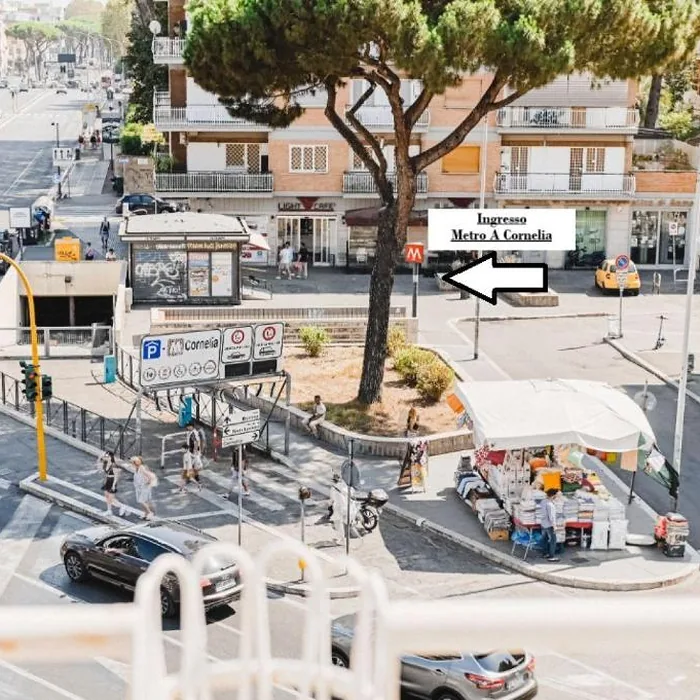
Take Metro Line A from Cornelia in the direction of Anagnina and get off at Cipro, the third stop after Baldo degli Ubaldi and Valle Aurelia. The ride takes well under ten minutes. From the station it’s about a ten-minute walk to the Museums entrance on Viale Vaticano: follow the signs for Musei Vaticani, or simply the crowd.
Cornelia is one of the deepest stations on the network, so allow a few extra minutes for the escalators, especially if you have a timed ticket. Ottaviano, one stop further, works just as well and is the better stop if you’re starting with St Peter’s.
You don’t need to buy a metro ticket in advance. Tap a contactless bank card or phone on the turnstile and you pay €1.50 per ride, the price of a standard 100-minute BIT ticket, and never more than €8.50 in 24 hours. The cap only works if you always tap with the same card or the same phone: a card stored in your phone’s wallet counts as a different device from the plastic one. Trains run from about 5:30 a.m. to 11:30 p.m., and until 1:30 a.m. on Friday and Saturday nights.
Tickets: book on the official site
The Museums’ own box office is tickets.museivaticani.va. A full ticket costs €20, plus €5 when you book online. That €5 is what the Museums call “Skip the Line”: with a timed booking you walk straight to the entrance instead of joining the ticket-office queue, which in high season can be long.
Reduced tickets cost €10 (€15 online) for children aged 7 to 18 and for students up to 25 with a document from their school or university confirming enrollment for the current year. Children under 7 go free. If you buy a reduced ticket and can’t show the right document at the entrance, you’ll have to buy a new full-price one.
Three things to know before you pay:
- Tickets carry the visitor’s name, and staff can check identity documents at the entrance. Enter each name exactly as it appears on the passport or ID card that person will carry.
- Tickets are valid only on the date you choose and can’t be refunded.
- Plenty of websites resell Vatican tickets with a markup, and on Viale Vaticano you’ll be offered “skip the line” tours by people with lanyards. Some are licensed guides, many are resellers. If you want a guided visit, book a reputable guide in advance. If you don’t, the official site is all you need.
In spring, summer and around holidays the morning slots go first, so book as soon as your dates are fixed. The official audio guide costs €8, lasts over three hours and is available in twelve languages. You can add it when you book and collect it at the entrance turnstiles.
When to go
The Museums are open Monday to Saturday from 8 a.m. to 8 p.m., with last entry at 6 p.m., and visitors are asked to leave the halls 30 minutes before closing. They’re closed on Sundays, except the last Sunday of the month, and on these days: 1 and 6 January, 11 February, 19 March, Easter Monday, 1 May, 29 June, 14 and 15 August, 1 November, and 8, 25 and 26 December.
On the last Sunday of the month entry is free from 9 a.m. to 2 p.m. (last entry 12:30 p.m.), with no booking. It sounds like a bargain, but the queue starts long before opening and the galleries are at their most crowded. The free Sunday is skipped when it falls on Easter Sunday, 29 June, or 25, 26 or 31 December.
For a calmer visit, we suggest one of these:
- The first slot of the day. The first hour is when you have the best chance of seeing the Sistine Chapel without being carried along by a crowd.
- The late afternoon. By about 3 p.m. many tour groups have left, and with last entry at 6 p.m. you still have time for the essentials.
- A weekday other than Monday. Mondays and Saturdays tend to be the busiest days, and the free Sunday is the busiest of all.
What to wear and what to leave behind
The Vatican is a place of worship and the dress code is checked at the entrance. Sleeveless or low-cut tops, shorts above the knee, miniskirts and hats aren’t permitted. In practice: cover your shoulders and knees. In summer, a light scarf or shirt in your bag solves the problem in ten seconds.
Travel light. Bags, rucksacks and packages larger than 40 × 35 × 15 cm, medium and large umbrellas, tripods and video cameras go to the cloakroom, which is free, and everything has to be collected the same day before closing. Selfie sticks aren’t allowed. Simply put, don’t plan the Vatican for a day when you’re carrying luggage.
Photos for personal use are allowed in most of the Museums, without flash. In the Sistine Chapel, photos, videos and phones are not allowed, and the guards ask for silence. You can’t eat or drink in the exhibition halls; there are cafés inside the Museums when you need a break.
The route: what not to miss
The Museums follow a one-way route of galleries, courtyards and staircases, and the Sistine Chapel comes near the end. Don’t race through the first half to get there: the best things are on the way. These are the stops we’d never skip, in the order you’ll meet them.
The Pinacoteca
The picture gallery is close to the entrance, and many visitors walk straight past it. Go in. Raphael’s Transfiguration, his last painting, hangs here, along with Leonardo da Vinci’s unfinished St Jerome and Caravaggio’s Deposition.
The Cortile della Pigna
A vast courtyard named after the ancient Roman fountain that sits in a niche at one end: a bronze pine cone almost four meters tall. In the middle stands Arnaldo Pomodoro’s bronze Sphere within Sphere. It’s a good place to sit for five minutes and get your bearings.
The Museo Pio-Clementino
The heart of the ancient sculpture collection. In the Octagonal Court stands the Laocoön, the marble group of a Trojan priest and his sons fighting sea serpents, dug up in Rome in 1506 and bought almost at once by Pope Julius II. Nearby are the Apollo Belvedere and the Belvedere Torso, the muscular fragment Michelangelo is said to have studied for his own figures.
The Galleries of the Candelabra, Tapestries and Maps
Three long corridors in a row. The last is the one everyone remembers: the Gallery of Maps, forty frescoed maps of Italy painted in the 1580s under a gilded ceiling. Look for Rome, or for your own corner of Italy.
The Raphael Rooms
Four rooms painted for the popes by Raphael and his workshop. The most famous wall is the School of Athens, with Plato and Aristotle at the center and, tradition says, the faces of Raphael’s contemporaries among the ancient philosophers.
The Sistine Chapel
Michelangelo painted the ceiling between 1508 and 1512 and came back more than twenty years later for the Last Judgment on the altar wall, finished in 1541. Between February and March 2026 the Last Judgment underwent extraordinary maintenance to remove a whitish veil that had formed on its surface, so you’ll see it at its best. This is also the room where the cardinals gather to elect a new pope, as they did in May 2025 for Pope Leo XIV.
Find a spot along the side walls rather than in the middle of the floor, and read the ceiling from the altar end: the Separation of Light from Darkness comes first, the Creation of Adam about halfway along. With no photos allowed, you’ll find it easier to actually look.
On the way out: the spiral staircase
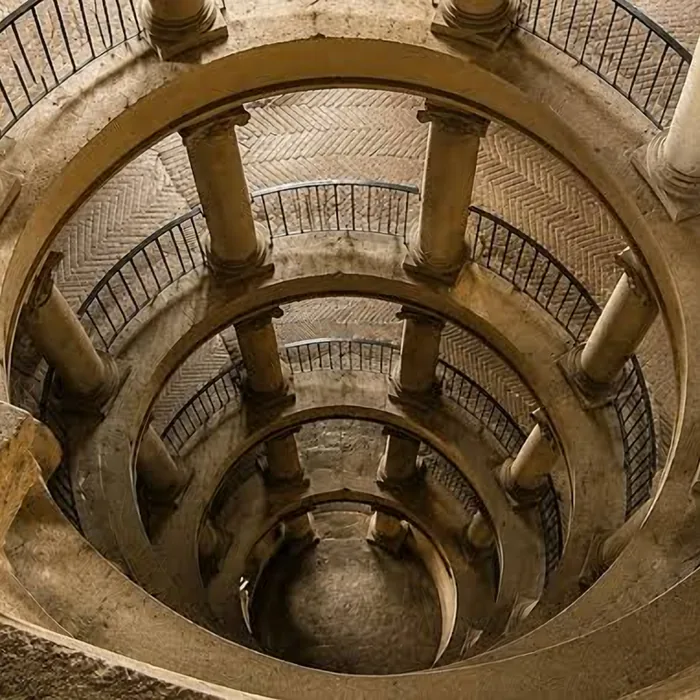
The double-spiral staircase near the exit is one of the most photographed spots in the Vatican, and it’s usually called the Bramante Staircase. It’s actually a 1932 design by Giuseppe Momo, inspired by Donato Bramante’s original of 1505, which stands elsewhere in the complex and is only shown on special tours.
Adding St Peter’s Basilica
St Peter’s isn’t part of the Museums and your ticket doesn’t include it. Entry to the basilica is free: you queue for the security check in St Peter’s Square, where the line is usually shortest early in the morning and late in the afternoon. The same dress code applies. On the official website, basilicasanpietro.va, you can also book a timed entry with a digital audio guide, for a fee.
You may read about a passage from the Sistine Chapel straight into the basilica. It’s generally reserved for guided groups and isn’t something you can count on as an independent visitor, so plan to leave by the Museums exit and walk around the Vatican walls to St Peter’s Square, about 15 to 20 minutes.
Climbing the dome is worth it if you’re fit and don’t mind tight spaces. There are 551 steps to the top, or 320 if you take the lift to the terrace level. Tickets can be booked on the basilica’s official booking site, from €17 with the stairs and €22 with the lift, both including access to the basilica, or bought on the spot while places last. The dome is open from 7 a.m. to 6 p.m. in summer and from 7:30 a.m. to 5 p.m. in winter.
Two timing notes:
- Wednesday morning is the Pope’s general audience, at 10 a.m. When it’s held in St Peter’s Square, the basilica and the dome stay closed until it ends, so keep St Peter’s for the afternoon.
- Sunday at noon the Pope usually leads the Angelus from a window of the Apostolic Palace, and the square fills up.
Where to eat nearby
The streets right outside the Museums are lined with tourist menus. Walk five or ten minutes into the Prati and Trionfale neighborhoods instead:
- Mercato Trionfale, Via Andrea Doria 41. One of Rome’s biggest food markets, with more than 270 stalls in color-coded aisles: green for fruit and vegetables, blue for fish, red for meat. Open Monday to Saturday from 7 a.m. to 2 p.m., and until 7 p.m. on Tuesdays and Fridays. Perfect for a picnic lunch.
- Pizzarium, Via della Meloria 43. Gabriele Bonci’s famous pizza by the slice, sold by weight. Expect a line.
- Sciascia Caffè 1919, Via Fabio Massimo 80/a. An old-school Prati café, known for espresso poured into a cup lined with melted chocolate.
- Gelateria dei Gracchi, Via dei Gracchi 272. Artisanal gelato, with vegan and lactose-free flavors.
Opening days change, so check before you go.
Frequently asked questions
How long does a visit to the Vatican Museums take?
Plan on three to four hours for the main route, Sistine Chapel included; the official audio guide alone runs over three hours. If you add St Peter’s Basilica, make it a full day.
Is the Sistine Chapel included in the Vatican Museums ticket?
Yes. The Sistine Chapel is part of the Museums route and there’s no separate ticket for it. St Peter’s Basilica is separate, and free.
Can I buy Vatican Museums tickets at the entrance?
Yes, for €20, but in busy periods the ticket-office queue can be long and availability isn’t guaranteed. Booking on the official website costs €5 more and lets you skip the ticket queue.
When is the Vatican Museums free entry day?
The last Sunday of each month, from 9 a.m. to 2 p.m. with last entry at 12:30 p.m., unless it falls on Easter Sunday, 29 June, or 25, 26 or 31 December. Expect very long queues.
How do I get to the Vatican Museums from Metro Cornelia?
Take Line A toward Anagnina for three stops to Cipro, then walk about ten minutes to the entrance on Viale Vaticano. Tap a contactless card at the turnstile and the ride costs €1.50.
Can I take photos inside the Vatican Museums?
Yes, for personal use and without flash, in most of the Museums. Photos, videos and phones aren’t allowed in the Sistine Chapel.